Most small business owners understand they need to write and publish blog posts but they don’t know where to start.
And, suddenly, they’re back in 7th Grade English class feeling like they can’t write.
I get it.
Many times we just need a coach.
The blogging and topic prompts in the Launch With Words Starter Pack are just that. Me, sitting next to you, giving you step-by-step instructions on what to write about, which questions to answer, and how to correctly format your blog post so you can hit publish.
I’d invite you to watch the 2026 video I created today for step-by-step instructions on how to work with the prompts, even with ChatGPT. Because getting started is the real problem. You know what to write. That’s why you have a business.
Want a Better Way to Write?
Blogging doesn’t have to be something you put off. It can be something you use — to clarify your thinking, connect with your audience, and grow your business without burnout.
If you’ve ever stared at a blank page and wondered what to write, I’ve been there too.
That’s why I built Launch With Words — to give you a starting point that feels intentional, not generic. You can begin with the free Starter Pack, which includes prompts you can use right inside WordPress or your favorite writing tool.
If you want help moving from idea to first draft without overwhelm, you can grab it here:
Pre-packaged, ready-to-install, blog posts gives more value to your website builds at launch — especially if you can schedule the articles to publish in the future.
If only there was a solution.
I was so excited when someone replied,
“If only!”
So when I continued the conversation, it ended up with the myth of being penalized by Google.
It’s not a new issue.
When I tell people about Launch With Words, the problem it solves, most people are super excited. But then they find out they are purchasing a content pack and they ask me:
“What about Duplicate Content?”
Can we do a story first? Hear me out.
Let’s go back to Bridget as the Director of Marketing for ThoughtHouse (2015-2017), an advertising agency in San Diego that specialized (they’ve since closed) in FranDev.
Franchise Development is getting people to purchase a franchise (or a group of them, ideally). We worked with Paul Davis Restoration, Sports Clips, WIN Home Inspection, and more. We would build their websites, handle their social media, write blog posts, and even teach their franchisees how to market themselves.
One of the problems franchisees have is syndicated content. You see, most of their websites are really a multisite. Blog posts would appear, but the franchisee couldn’t edit it — at all. They couldn’t localize the copy or anything. It was super generic, bland copy. So even though they are the business owner, they really couldn’t publish on their company website.
Now, let’s fast forward in time when Bridget was the vendor for RooferMarketers.com (a 7-figure agency a la Josh Nelson, that was since acquired). My role for this marketing agency (because I have a background in roofing) was to write templated blocks of copy for our internal library.
When we built a website (one of three templates) we would add the templated block of copy for the service they provide. If they do metal roofing, copy/paste. If they do shingles, copy/paste. If they do siding, copy/paste.
Copy. Paste.
That sounds a lot like duplicate content.
Do you know what the difference was?
The context of the website. The demographic. The geographic service areas.
That’s how I got the idea of Launch With Words. Why not make templated articles that would help the business with content to share on social media? I mean, I’m always writing for my clients because they need content to share on social media.
If this sounds like a product you think would help you or someone you know who builds websites, would you do me a favor and share this?
You’re doing a lot to keep a single woman in business. I appreciate you.
Full Video Transcript
Bridget Willard (00:01): Hey there, it’s Bridget Willard here. Get a lot of questions from clients. “What do I write about for my small business blog?”
Bridget Willard (00:10): That was the whole reason why I came up with Launch With Words. There is a very, a free version, if you haven’t heard about it, that’ll gives you blogging prompts.
Bridget Willard (00:20): So you need this plugin from the WordPress repository, a plugin directory. My good friend Ronald Huereca built it for me. It has a lot of great reviews. It’s still going and it has a lot — a helper.
Bridget Willard (00:38): So you get the Starter Content pack and you need to download this plugin. So let’s go to your website. Here’s my website. I just spun up from, from TasteWP, which is a great, a great little, great little way to taste WordPress.
Bridget Willard (00:58): Let’s go to my dashboard. I’m gonna go to plugins, install plugins. Okay, thank you. Okay, I got it. I’m gonna install Launch With Words. I’m gonna, it’s not here, right? So I go add plugin, “Launch With Words.”
Bridget Willard (01:25): The original reason for Launch With Words is to apply the prompts from my book, “If You Don’t Mind Your Business, Who Will?” into blog drafts that will help you and prompt you along the way.
Bridget Willard (01:41): So I could go install now. Perfect. I’m gonna activate it. If you need to know how to do it, there’s a video right here. The, this is where you import your content packs, right here in this tab.
Bridget Willard (02:04): So you need the author. And usually I create, I, I recommend that you create a user that is not just admin ’cause it looks ugly, right? So I’m gonna change it to my name, Bridget Willard. And I’m gonna have the name display as Bridget Willard. That’s important ’cause that will, that’s how the author will look. Update my profile.
Bridget Willard (02:37): Now, for the categories, let’s pretend that I am a flower shop. So I’m gonna go in here to post and I’m go to go, I’m going to go to categories. Because the blog post prompts will come in and import as a category. So let’s talk about Floral design. Let’s talk about Services. Floral delivery, Floral Services.
Bridget Willard (03:19): Okay. So we have those and we’re gonna make one of ’em a default. It lets us, (where?), I think that’s in the settings. Yep. Settings, “Florall Services” is gonna be my default.
Bridget Willard (03:44): Oh, one other little tip, tip if you’re a new blogger, oops, is, excuse me, um, is to change it. To change your permalinks. So important. I don’t even know why this isn’t the default, the post name. Just make it the post name. You’ll be so happy you did. It’s a SEO thing. I really don’t know why date and time is the default for WordPress.
Bridget Willard (04:13): So let’s go back to posts. Launch With Words is about blogging. So it’s always under posts.
Bridget Willard (04:22): So I need my free starter pack, right? So download my free starter pack.
Speaker 2 (04:29): It’s gonna take you to my website, launchwithwords.com/. Oops. Starter. Oh, there’s a starter pack in German. And we’re gonna take, we’re gonna take the regular starter pack. It’s free. Okay? I am gonna check out. Get now. Oh, I have to do this. There’s my receipt. The receipt will tell me how to get it. It’s downloading.
Bridget Willard (05:23): It’s A-J-S-O-N file. Or Jason, JSON. I’m really not sure how you pronounce it. I should know. I always, I always thought it was json, but I hear other people saying, Jason.
Bridget Willard (05:33): So let’s go back to my, my little website that I’m making. I’m gonna import a contact pack, author, floral Delivery. See, ’cause I made that the, I’m gonna change. I’m gonna change it to Floral Services. Choose file.
Bridget Willard (05:55): Now, this part, it depends on what kind of computer you have. Windows Mac, I’m on a MacBook. It automatically goes to my downloads. So I know that that’s where it is. LWW Launch With Words Starter Pack 2025. I updated it last year. Look, 12 posts have been created. It took seconds.
Bridget Willard (06:17): Now, now I go to all posts and here we have our posts. They’re all drafts. So if I went to my blog, which I need to actually make a blog. I forgot to tell you that.
Bridget Willard (06:31): This is another weird thing about WordPress. You just need to make a page that’s called “blog.”
Bridget Willard (06:41): Don’t do anything to it and just publish it. Then right now it, it just has nothing on it. So let’s go back to our dashboard. There’s one more little setting, and this is on WordPress because it, it’s just so weird. Let’s go to general. Um, oh, it’s Reading, right? Yeah. Homepage displays your static posts, your latest post blog posts or static page.
Bridget Willard (07:19): So my homepage is gonna be the sample page, and my post page is gonna be my blog. And I’m gonna save that. So now when you go to my site, I have my sample page, right? And then if I click blog, I have my blog posts, which always has “Hello World.”
Bridget Willard (07:38): There are millions of websites that have Hello World . It’s duplicate content.
Bridget Willard (07:46): Alright, let’s, let’s go back. So let’s go back to our dashboard. This is all under 10 minutes. We’re at seven minutes.
Bridget Willard (07:57): Go to our posts. Let’s go to January. It did, it did also email me. Oh no, that was something else. Sorry, you don’t need to see that. Where are we?
Bridget Willard (08:23): Let’s go to January. I’m gonna edit. So I have some choices. So I have some choices. I have the draft blog post with questions I’m gonna answer or an AI prompt.
Bridget Willard (08:45): Then there is a checklist. Grab yourself, a featured image. Create one on Canva. Just go through the link. Do your meta description, your ShareThrough like this. These are like pro tips right here.
Bridget Willard (09:01): So if I wanna do an AI prompt, I can select this. If you use Atarim or Bertha.ai, you can do that. You can also go to ChatGPT and I’m going to paste that prompt in there.
Bridget Willard (09:27): Now, the, the regular, the regular part is, “The beginning of the year is a great time to write about starting new habits. Topics for the beginning of the year should be more than just a post about your business goals or personal real solutions. Challenge yourself to create content that’s useful all year round and or highlight products, new or old that your company’s offering. How does your product or service factor into the customer’s journey? How does the customer use your products or services in a new way? How does your product solve a customer’s problem?”
Bridget Willard (10:02): That’s the, that’s a great new year and you don’t have to do January in January, but this is a suggestion. Let’s go back to ChatGPT. Which service should we highlight? “So say I am a florist in San Diego, California, and my, and the service I want to highlight is funeral arrangements.” I mean, maybe that’s my big thing. Who knows?
Bridget Willard (10:51): So you can go with this, right? You can pick the ChatGPT. So if that’s your way, that’s what you wanna do, you can definitely do that. Okay? Okay. I’m gonna copy this. Oops. But you’re gonna, you’re gonna select it all. Oops. We wanna, I, I don’t wanna delete the checklist yet, but I do wanna fix that and I wanna change the title from January Blog post to the title that ChatGPT gave me. I’m gonna delete this ’cause that’s just, that’s one of the things you’re gonna wanna do is make sure your slug isn’t, doesn’t say January, right?
Bridget Willard (12:25): So let’s just publish it for now. It doesn’t have a featured image or any of that yet. Let’s view the post and there it is. There it is.
Bridget Willard (12:39): So, it’s so easy to use Launch With Words to help you write. If you wanna do it yourself, that’s fine, but maybe if you’re using chat GBT, it gave you something to go off of and I would highly consider, uh, recommend that you would edit this.
Bridget Willard (12:57): Anyway, my name is Bridget Willard. I’m the owner of Launch With Words, a small business copywriting plugin that helps you write one blog post every month, gives you topics. It’s totally free. I would love it if you would try it and I’d love it if you would review it. Bye.
Let’s be a bit frank about the number one objection I hear about Launch With Words: What about duplicate content?
“Duplicate content. There’s just something about it. We keepwritingaboutit, and people keep asking about it. In particular, I still hear a lot of webmasters worrying about whether they may have a ‘duplicate content penalty.‘
Let’s put this to bed once and for all, folks: There’s no such thing as a ‘duplicate content penalty.’ At least, not in the way most people mean when they say that.” Google
How Many Different Brands of the Same Thing Do We Need?
My grocery store sells nine different brands of plain yogurt. Nine. How many types of plain yogurt do we need? One.
They sell fifteen different brands of ketchup, twelve different brands of mustard, and about twenty different brands of olive oil too. How many do we need? Honestly? How many would get the job done? Probably one of each.
Most people use Heinz ketchup. 150% more expensive than other brands – it’s still all ketchup though.
How many different colas are there? Aren’t they all just fizzy drinks?
There are more than 3,000 different brands of mustard in the world!
I don’t know how many olive oil brands there are but Spain alone has 93!!
50 different brands of sandwich bread, 85 different yogurt brands, 100 different types of beer … !!!
We live in a world of duplicate content, and we pay top dollar so it has a different label.
Bridget Talks About The Real Problem Service Businesses Have
If you want the full walkthrough—including real-world examples, Google quotes, and why this fear keeps resurfacing—watch the video here:
Launch With Words vs the Duplicate Content Objection
Duplicate Content Is Not Your Problem (And Never Was)
If you’ve ever hesitated to publish content — or buy a Launch With Words pack — because someone warned you about a “duplicate content penalty,” this post is for you.
In my latest video, I break down why this objection keeps coming up—especially from web developers — and why it’s largely misplaced fear.
Here’s the short version:
Most small business websites don’t have enough content for duplicate content to even be a concern. Also, Launch With Words isn’t so wildly successful (yet) that duplicate content would be a factor. But thank you for thinking that.
Additionally, Launch With Words was never meant to be the only content on that website. That’s why it’s called Launch (as in launch the website) with Words (with blog posts).
The Real Problem Small Business Websites Have
The vast majority of local business sites:
Have no blog at all.
Have nothing new to share on social media.
Give visitors no reason to trust, explore, or convert.
As a WordPress developer, this probably doesn’t surprise you. When was the last time you built and launched a website with blog posts?
Potential customers still check websites to validate their searches and referrals.
They get a referral. They scan a QR code on a business card. They Google the business name. And when they land on a site with no content, no updates, and no proof of expertise—it’s a dead end.
Service-based businesses have a long-standing reputation of being fly-by night. Consistently publishing articles, shows customers that they’re serious about their contracting business.
It turns a one-time build into an ongoing relationship.
And yes—this content is written by humans (me + Warren Laine-Naida), includes strategic outbound links, real calls to action, and topics pulled directly from real search behavior.
If you have questions about Launch With Words, content strategy, or how to use this responsibly for clients, you can always reach me at he***@************rd.com.
Your Friend, Bridget
Full Transcript
Bridget Willard (00:02): Hey there, it’s your friend Bridget Willard here. I wanna talk a little bit about duplicate content. So it seems that a lot of people think about duplicate content from strictly, I’m gonna search this one thing on Google and maybe find some answers, right? So most websites aren’t even found in the first page results. So duplicate content is not your problem.
Bridget Willard (00:31): Your problem is when you have a website, it has no blog at all. It has nothing for you, as the business owner, to share on Facebook, Pinterest, Reddit, LinkedIn, Twitter, X, et cetera.
Bridget Willard (00:52): You people get referred to you, they get your business card, right? Get your business card, and they’re like, I wanna go look at this website. Or they, maybe there’s a QR code on the back. I, I collect all these web, all these business cards because I think it’s really fascinating.
Bridget Willard (01:14): Now, these two were from a, a Fair Co. Cookies and Cupcakes. They have Facebook pages, Laura’s Cup, cup, Cakery Cupcakery has two as LinkedIn, I’m sorry, Facebook and Instagram. But there are no, there’s no website unless that’s what this QR code does. I have no idea the same, same with this, just a phone number. And that’s fine when you’re starting out.
Bridget Willard (01:47): But you know, if I get, if I get a business card or if I see you, or if I see an ad for you, especially if you’re a home service, a handyman, I wanna go check you out. I wanna see what other work have they done. Do they have reviews on Google Business?
Bridget Willard (02:04): So the idea of Launch With Words is that the developer will buy these packs or mini packs so that the website has some content on it that’s publishing. Either pre-published, back published, some published, forward publishing, but it is never meant to be the only content on that website. Instead, it’s meant to show the client that these blog posts are helping. They give them something to share on social media. There is something publishing, which is a, an authority signal to Google, and also it helps inspire them to write more content.
Bridget Willard (02:51): If you use the Starter Pack along with one of the other packs, you’ll see there are 12 prompts, one for each month that asks the business owner questions. It also encourages them to make video, do case studies. And there are AI prompts that work very well with ChatGPT.
Bridget Willard (03:11): So I think in 2026, not being afraid of AI, not being afraid of random penalties, none of these small businesses are ever going to have the volume that’s going to appear where duplicate content is their problem.
Bridget Willard (03:30): Instead, what we’re, what I wanna share your, I’m gonna share the screen. Okay, here it is. Let’s, let’s share this. Duplicate content on a site. Here we go.
Bridget Willard (03:51): “Duplicate content on a site has no grounds for action on that site unless it appears that the intent of the duplicate content is to be deceptive and manipulative to search results and to manipulate search results.” Google.
Bridget Willard (04:07): So, in other words, spam. Okay? So this is from 20 2008.
Bridget Willard (04:15): “There’s no such thing as a duplicate content penalty.” right? But it also says, “don’t create multiple pages, subdomains or domains with substantially duplicate content.”
Bridget Willard (04:25): Now, this is something SEOs do all the time. You’ll look for a lawyer maybe in Corpus Christi, and you see these lawyers and it has a page just for Corpus Christi. And then their offices are where? Houston, San Antonio, Austin. They’re not in Corpus Christi. So these kinds of service pages where they randomly have this random page instead of just listing the cities that you serve, instead, you’re doing something that is really not working.
Bridget Willard (05:00): It’s also about local. So what if I say roofer near me?
Bridget Willard (05:10): Now I have some sponsors re sponsored results, I have more sponsored results, and now I’m getting to the maps. Bayfront Roofing, uh, we know them. They are on TV all the time. They’re in Walmart. Phillips Roofing, all this stuff.
Bridget Willard (05:29): If you go to a a, you know, a website like this, you would expect to see blog posts that would help you decide about maybe what kind of materials to use, right? (That’s a lot of popups.) Now. They buried the blog.
Bridget Willard (05:58): “What to consider before having a skylight installed.” Like these are actual, actual questions. So if the customer’s like, yeah, I saw Bayfront Roofing at Walmart and I talked to them, and now I’m kind of considering, ’cause really my hallway doesn’t have a lot of natural light, or my bathroom doesn’t have a lot of natural light. I know we get hail here. I know we have wind storms.
Bridget Willard (06:21): Is that something that is important? You know, so December, 2025, they just added this. They’re gonna talk about it more natural light improvement in health, blah, blah, blah, blah. You get the point.
Bridget Willard (06:35): So, if you have a website that has some of this content, you, the great thing with Launch With Words is you can edit it. It just gets imported into your draft folder. So you can localize it, you can change the call to action.
Bridget Willard (06:52): It, it’s not syndicated content like every single newspaper has with the AP. Talk about duplicate content.
Bridget Willard (07:01): How about product pages? Nike’s shoes have the same description. No, no matter where they are.
Bridget Willard (07:08): The point of it is for you as a web developer to add in some profit to your service plan, not just website hosting, not just website maintenance, but content. Content that they can use to share on Facebook, to share on Google Business profile, and everywhere else.
Bridget Willard (07:31): And you could offer a service to localize it for them. Another opportunity for you to upsell.
Bridget Willard (08:14): Now, why am I still talking about Launch With Words? Because I believe in this product. I believe in its ability to help you gain a better ground with your clients, that it’s not this one and done build the website. Keep the client for maintenance. Take control of the content. It’s not written by AI, it’s written by me. It’s written by Warren Lane-Naida. There are outbound links, there are calls to action. There are non-competitive outbound links strategically put there for SEO. The questions and the topics are top some of the top topics in a Google search. These are strategic, they’re not fluff.
Bridget Willard (09:00): So I would love to have you go to LaunchWithWords.com. You can find it on my site in the footer. I’ve repositioned it. I’ve changed the multi-site pricing to only $200 as an add-on.
Bridget Willard (09:14): This is a great idea. You know how to build websites, go pitch roofers, use my content pack. It comes with a free template that I built for Roofer Marketers that they use. They have now been acquired for the exact Mad Libs of home, about, and services. This is a great, great deal. If you have $500 and you’re willing to put some effort into building websites for local contractors.
Bridget Willard (09:43): If you have any questions, reach out to me at he***@************rd.com.
Bridget Willard (09:47): Thank you for listening. I believe in this product and I’m using it to build websites here too. So why aren’t you? Bye.
Editor’s note: I asked ChatGPT what they thought about Launch With Words — giving the pros and cons of it versus AI. This is what they came up with.
TL;DR: Pros and Cons
🚀 Selling Pros
Saves time – pre-written, ready-to-use blog content
SEO-friendly and structured for engagement
Easy for agencies to offer as an upsell service
One-time cost – no recurring subscription
Perfect for small businesses needing content fast
⚠️ Considerations
Not custom-written per client (requires minor edits)
Limited to available industry content packs
Higher upfront cost than AI-generated content
Best for specific industries – not all niches covered
Still requires client involvement for full personalization
Introduction
WordPress developers and agencies often face a common challenge: providing quality content for the websites they build. Fresh, relevant content is crucial for engaging visitors and boosting SEO, but writing blog posts for every client can be time-consuming.
Two emerging solutions can help: Launch With Words, a WordPress plugin that supplies ready-made blog content packs and prompts, and general AI content generation tools (like GPT-based writing assistants and WordPress AI plugins). This article compares Launch With Words with AI-driven tools across key factors – from content quality and SEO optimization to ease of use and cost – to help WordPress professionals choose the right fit for their workflow.
Content Generation Quality and Uniqueness
Launch With Words: This plugin delivers human-written content crafted by an experienced copywriter. For example, its premium “content packs” provide 12 draft blog posts (around 500+ words each) tailored to a specific industry
These posts come pre-formatted with proper headings, links, and even pull-quotes for a professional touch
The topics often address common customer questions in that industry, ensuring the content is relevant and useful to readers.
Because the content is written by a real writer with subject knowledge, it tends to be well-structured and engaging right out of the box. One consideration, however, is uniqueness – these packs are sold to multiple users, so the base content isn’t exclusive to one website. While there is no direct Google penalty for duplicate content, having identical posts as other sites can make it harder to rank since search engines must choose which version to show
Launch With Words anticipates this by encouraging users to customize the drafts for their locale and specifics ensuring each site ends up with a unique variation of the content. In terms of effectiveness, the human-written nature means the content is usually coherent and on-point, requiring minimal editing for clarity or tone.
General AI Tools: AI writing platforms (from standalone tools like ChatGPT to WordPress plugins integrating GPT-3/4) can generate content on virtually any topic. The quality of AI-generated text has improved dramatically – modern AI can produce readable, informative articles in seconds. Each output is unique, created word-by-word by the model, so you won’t get the exact same text as another user (which is a plus for originality).
AI can even adapt style and tone if instructed, yielding content that fits different brands or audiences. However, AI content quality can be inconsistent. Without careful prompting and oversight, AI might generate passages that are generic or factually off-base. Common issues include lack of deep context understanding, occasional inaccuracies, or a formulaic feel in the writing
These tools excel at producing a quick first draft, but that draft often benefits from human review and refinement to ensure nuance and accuracy. On the effectiveness front, AI can create content that performs well – for example, answering user queries or providing how-to advice – but its effectiveness largely depends on the user’s guidance. A well-structured prompt can lead to highly relevant content, whereas a vague prompt might result in fluff. In short, AI tools offer unmatched speed and originality, but the quality and effectiveness of their output hinge on skilled human input to guide and polish the content.
SEO Optimization and Integration
Launch With Words content is built with SEO-friendly practices in mind, though it doesn’t automate SEO the way a dedicated SEO plugin would. The provided blog drafts follow a sensible structure (with headings and logical flow) that aligns with good on-page SEO fundamentals
Topics like FAQs and seasonal posts are chosen to naturally include keywords and phrases potential customers might search for. In the free version, the monthly blogging prompts come with a checklist reminding users to add images, refine headlines, set categories, and include “your SEO bits” (keywords, meta descriptions, etc.)
This serves as a gentle nudge toward optimizing each post for search engines. The premium content packs, being more fleshed-out posts (~500 words each), are designed to be directly publishable and helpful to readers – which is exactly what search algorithms favor. Having turnkey, high-quality content ready means site owners can publish consistently (e.g. one post a month), signaling to Google that the site is active and relevant
However, because multiple sites may use similar base content, it’s wise to localize or expand the drafts to target your specific keywords or geographic area
This customization helps avoid any SEO clashes and lets you tailor posts to long-tail keywords for your niche. In summary, Launch With Words provides an SEO-friendly foundation (good structure and relevant topics) and encourages further optimization, but it doesn’t replace using an SEO plugin or strategy – it works best in tandem with your own SEO efforts.
General AI Tools: AI writing tools can be powerful allies for SEO – especially when paired with the right strategies. Many AI content platforms now integrate SEO features or can be instructed to follow SEO guidelines. For instance, some WordPress AI plugins offer built-in optimization tips or even analyze top-ranking content to guide the AI’s output
You can ask AI to include certain keywords, craft SEO-friendly titles, or generate meta descriptions automatically. In fact, popular WordPress SEO plugins like All in One SEO and Rank Math have begun incorporating AI to help generate optimized titles and meta tags based on the post content
AI can quickly suggest multiple title variations or identify relevant LSI keywords to sprinkle into an article. The advantage here is adaptability: if you need a blog post targeting a specific keyphrase, an AI writer can focus on that exact topic. That said, using AI doesn’t guarantee SEO success – the content still needs to meet Google’s quality criteria. Google has stated it will not outright punish or ban websites for AI-generated content as long as that content is helpful and not simply spam to game rankings
In practice, this means you should use AI as a helper to create genuinely valuable articles, rather than churning out keyword-stuffed text. One concern is that AI, if left unchecked, might produce subtly off-topic content or miss the intent behind a keyword. To counter this, some AI tools integrate with SEO analysis services (like Surfer SEO, Frase, or RankMath’s Content AI) to score and improve the content’s optimization.
WordPress developers using AI should still plan to review each AI-written piece for SEO essentials: ensure the keyword appears in key places, the content answers the intent, and internal links or calls-to-action are added as appropriate. In essence, AI tools can significantly streamline the SEO content process – from research to writing – but they work best under human guidance to make sure the end result aligns with a smart SEO strategy.
Ease of Use and User-Friendliness
Launch With Words: Simplicity is a major selling point of Launch With Words. It’s delivered as a standard WordPress plugin, which developers can install like any other. Once activated, the free version automatically creates draft posts for each month’s suggested topic (e.g. “October Draft Blog Post,” “November Draft Blog Post,” etc.). Users (or their clients) can click on these drafts, read the prompt or pre-written content, and then add their own touches or publish. The interface is just the familiar WordPress post editor – no new systems to learn.
In the premium content packs, the plugin acts as an importer that loads the ready-made articles (via a JSON file) into the site as draft posts
This means within minutes, a brand new site can have a full set of blog drafts waiting. For a WordPress developer handing off a site to a client, this is extremely user-friendly: the client finds a blog already populated with content they can review and publish on schedule.
There’s essentially zero learning curve for the end-user beyond basic WordPress editing. Setup is straightforward as well – no APIs, no external accounts. The most the developer might need to do is purchase a content pack file and use the plugin’s import feature, which is usually just a few clicks. In summary, Launch With Words is plug-and-play. It leverages the familiarity of the WordPress dashboard and keeps things simple, making it a hassle-free solution for both developers and non-technical clients to get content up and running.
General AI Tools: The ease of use for AI content tools can vary widely. On one end, you have web-based AI writers (like the ChatGPT interface or Jasper’s online app) which require copying the generated text into WordPress. While these tools are generally user-friendly, using them alongside WordPress is an extra step and might be daunting for non-tech-savvy users. On the other end, there are WordPress plugins that bring AI directly into the editor. For example, some plugins add an “AI Assistant” block or meta box where you can enter prompts and generate text without leaving the page
These integrated tools are improving in usability – often featuring simple “Generate Paragraph” or “Continue writing” buttons in the post editor. However, setting up AI in WordPress usually requires a bit more configuration than Launch With Words. Most AI writing plugins need an API key from a service like OpenAI which means the developer has to sign up for that service and possibly incur usage costs. There might also be settings to tweak (choosing AI model, adjusting creativity level, etc.) which introduce complexity. Additionally, effectively using AI involves learning how to craft good prompts. A WordPress developer might adapt quickly to this, but a typical client might find it confusing at first (“What do I ask the AI to get a good blog post?”).
Documentation and support vary by tool – some plugins have in-editor tips and predefined prompts to help users, which is great for ease of use. Overall, while AI tools are becoming more user-friendly (and many are directly integrating into familiar workflows), they still demand more active involvement from the user.
There’s a bit of experimentation and learning required to consistently get great results. In contrast to the one-click content of Launch With Words, using AI feels more like a new creative process to learn. For a developer willing to invest time, this process can become quite smooth, but for handing off to a less technical client, it may require training or a managed approach (e.g., the developer uses the AI tool to prep content for the client, rather than the client doing it themselves).
Cost and Value Proposition
Launch With Words: The cost structure of Launch With Words is straightforward. The base plugin (with the year’s worth of monthly blog prompts) is free, which provides value in the form of guidance and structure but not full content. The real content comes from purchasing industry-specific packs. These premium packs carry a one-time cost – for instance, the first pack (for roofing contractors) is priced around $497 for 12 ready-made posts
That comes out to roughly $40 per post for professionally written, niche-specific content delivered to your site. Additional packs (for other industries like general contractors, etc.) are similarly priced, and the creator has mentioned possibly offering smaller packs of prompts at around $97
For WordPress agencies, these packs are a one-time investment per client/industry. The value proposition is that a developer can buy a content pack and pass the cost to the client as part of the project (potentially marking it up as a service of populating their blog).
In many cases, this is still cheaper than hiring a freelance writer to produce 12 custom articles, which could run several hundred dollars in total for equivalent quality.
It’s also a time saver – the content is available immediately, whereas writing from scratch (even when outsourced) takes time and project management. That said, $500 per site is a significant upfront expense, especially for smaller projects or tight budgets. If a developer only occasionally needs one or two posts, buying an entire pack might be overkill.
The free version’s prompts could guide the client to write content themselves (at no cost), but that shifts effort back to the client. In terms of overall value, Launch With Words offers high-quality content for a premium price.
Agencies serving a specific niche might find it cost-effective – e.g. pay once for a pack and use it (with modifications) for multiple clients in that niche – though they should be cautious about identical content across clients. For individual site owners or developers with diverse clients, the à la carte pricing means you pay only for what you need, but you might not find a pack for every scenario. There’s no ongoing subscription fee for the plugin; the costs are one-time content purchases, which is attractive if you plan to reuse the site indefinitely with that content.
General AI Tools: AI writing tools range from completely free options to premium SaaS subscriptions, so cost can scale with usage. Many WordPress developers might start with ChatGPT, which currently offers a free tier and a Plus subscription at $20/month for faster, more reliable access
At $20 a month, a developer could generate content for multiple client sites, making it extremely cost-efficient per article (just pennies in computing cost for each blog post generated). Other AI writing platforms like Jasper, Copy.ai, or Writesonic typically use a monthly subscription model. For example, Jasper’s plans start around $49/month for an individual creator account which allows unlimited word generation and additional features. Team plans can be over $100/month for multi-user collaboration
If a WordPress agency subscribes to such a service, they can leverage it to produce content for dozens of projects, getting a lot of bang for the buck. Moreover, some WordPress AI plugins are free to install but require an OpenAI API key – in those cases, the cost is pay-as-you-go for usage. OpenAI’s API is relatively inexpensive (e.g., a few cents for a typical blog post’s worth of tokens), meaning even heavy usage might amount to only tens of dollars per month.
In weighing value, AI tools have a lower cost per piece of content compared to purchasing pre-written packs or hiring writers. However, one must factor in the human time involved. AI can create a draft in minutes, but a developer or content editor will spend time refining that draft. Time is money – if a quick edit suffices, it’s still a net gain, but if each AI article needs significant rewriting, the effective cost rises.
Another consideration is subscription commitment: with Launch With Words you pay once and own the content pack, whereas with AI software you pay continuously for access. If you cancel an AI subscription, you lose the tool (though you keep any content you already generated).
For a developer who constantly needs new content across different topics, an AI tool subscription might be the most economical choice. It provides flexibility to generate anything, anytime, under a predictable monthly fee. On the other hand, if content needs are limited and specific (e.g., one site, one industry, 12 posts needed), a one-time content pack purchase could be a better value than several months of an AI service.
Ultimately, AI tools are very cost-effective for scaling content production, but Launch With Words can be cost-effective for high-quality targeted content without ongoing fees – it depends on the scope of your content needs and how you budget time vs money.
Effectiveness in Scaling Workflow
Launch With Words: From a scaling perspective, Launch With Words acts like a force multiplier for WordPress developers who want to deliver more than just a bare-bones website. By having a bundle of blog posts ready to go, a single developer can significantly reduce the time spent on content creation per project.
This means you can launch websites faster or take on more clients without worrying about writing content from scratch for each one. It’s particularly effective for agencies focusing on certain verticals: if you frequently build sites for, say, roofing companies or real estate firms, you can standardize a process where each new site gets a relevant content pack.
That’s essentially a year’s worth of blogging done in minutes for each client. Clients benefit by seeing immediate value – their new site isn’t empty; it’s populated with information that can engage their audience and even drive traffic. According to Bridget Willard (the creator of Launch With Words), having this turnkey content ready means businesses have more material to share on social media and a better shot at SEO, since their site will consistently publish useful articles
This helps agencies demonstrate quick wins for clients (like improved web presence and SEO signals), which in turn can make for happier, long-term client relationships. In terms of scaling within an agency, there’s minimal overhead to using Launch With Words. One person can import the content pack and do light customizations (swap in the client’s business name, tweak any region-specific details) and be done. The limitation, of course, is that you’re scaling breadth but not depth of content – each site gets roughly the same set of 12 posts (with minor edits). If all your clients expect completely unique content strategies, this approach wouldn’t scale in that scenario.
But for many small business clients, a set of informative, generic-yet-customizable posts is “good enough” to establish their blog. So, Launch With Words lets you scale the content delivery efficiently, though not necessarily the content variety across clients (unless you have many different packs).
General AI Tools: When it comes to scaling content production, AI tools are incredibly powerful. They enable a developer or agency to produce content at a volume and speed that would be impractical manually. For example, with the right prompts or templates, an AI system could generate dozens of blog post drafts in a day – something that would normally require a team of writers. This is further enhanced by features some AI-driven WordPress plugins offer, like bulk content generation. Imagine inputting a list of topics and having the AI create a draft for each one automatically
Some tools provide a “bulk content builder” interface where you can queue up multiple titles or questions and have the AI churn out posts for each.
This level of automation allows agencies to scale their content offerings dramatically. A small content team armed with a good AI workflow can serve many more clients or publish far more frequently than before. Moreover, AI can help scale other content-related tasks: generating social media captions, product descriptions, page copy, etc., all within one platform, which adds to operational efficiency.
However, scaling with AI isn’t just a push-button utopia – the effectiveness of this scale depends on maintaining quality control. It’s easy to generate a lot of words; it’s harder to ensure those words truly benefit the client’s goals. Agencies that successfully use AI at scale usually implement a review process: human editors or strategists check the AI output, ensure it aligns with the client’s voice and factual needs, and optimize it as needed.
The good news is that even with review time, content creation throughput is much higher than without AI. Another way AI aids scaling is by handling repetitive or boilerplate content. For instance, if an agency manages 50 local business websites and needs a “Happy Holidays” post or a service description for each, AI can produce variants of that content quickly, freeing the team to focus on more strategic work. In summary, AI tools are extremely effective for scaling up content work – they reduce the bottleneck of writing. The agencies that stand to gain the most are those that handle large volumes of content or need to cover a wide array of subjects on a tight timeline
As long as quality oversight is in place, AI allows WordPress developers and content teams to serve more clients and publish more content without a linear increase in headcount.
Flexibility and Customization
Launch With Words: The content from Launch With Words is designed to be adaptable, but it has predefined boundaries. Each content pack is tailored to a specific business category (like roofing, HVAC, etc.), which means the topics and tone are chosen to fit a generic business in that industry. Developers and site owners are encouraged to customize the drafts to fit their exact business. In practice, this might involve inserting the company’s name, adding details about the company’s services or local area, and adjusting any wording to match the brand’s voice.
Because the content is delivered as regular WordPress posts (in draft), users have full control to edit them as much as needed. The writing style out-of-the-box is generally conversational and small-business-friendly; if a client prefers a more formal or quirky tone, the developer would need to revise the text to reflect that.
The flexibility is there in the sense that nothing is locked – it’s like getting a ghostwritten article that you can modify freely. However, Launch With Words won’t automatically adapt the content for you; it provides the starting point. Another aspect of flexibility is content breadth: if a client’s business has unique services or a niche focus not covered by the pack, you might need to create additional content beyond what’s provided.
The plugin itself doesn’t generate new topics – you get what’s in the pack. This is where some users might mix approaches (e.g. use the 12 provided posts, then write or generate a few more on specialized topics to round out the blog). In terms of accommodating different business needs, Launch With Words excels when the business squarely fits an available content pack, and it allows moderate customization within those posts. It’s less flexible if the business type is uncommon or if the client needs very specific content angles – in those cases, you’d have to supplement with custom writing.
On the whole, Launch With Words offers a semi-custom solution: it covers common ground for an industry and leaves the fine details to you.
General AI Tools: AI content generators shine in customization and flexibility. Since an AI doesn’t have a fixed set of outputs, you can tailor your prompts to produce content for virtually any business type, any topic, and any style. This means whether you’re building a site for a florist, a tech startup, or a bilingual non-profit, an AI tool can help create content suited to that context. With the right instructions, you can set the tone (e.g. “write in a friendly, informal voice” or “use a professional and technical tone”), adjust the complexity (maybe simpler language for a broad audience, or more jargon if writing for experts), and include specific details (“mention our 30 years of experience and our free consultation offer”).
The AI will incorporate these into the content as directed. This level of customization is something a fixed content pack cannot offer. Additionally, AI can generate different types of content on the fly – not just blog posts, but also FAQ sections, product descriptions, listicles, or even code snippets for a developer blog, all within the same tool. For WordPress developers, this means an AI assistant can adapt to various content needs across different projects. Another form of flexibility is language and length: you can request content in different languages or quickly get a shorter/longer version of a piece, which is useful if you need, say, a snippet for a homepage and a full article for the blog.
The flipside of this flexibility is that it relies on the user’s ability to articulate the requirements. If the prompt or guidance to the AI is too generic, the output might also be generic. Achieving a truly custom-feeling piece might take a couple of iterations (e.g., “that’s close, but add a paragraph about X and use a more playful tone”).
Thankfully, many AI tools allow refining the output easily by either editing the prompt or directly instructing the AI further. In summary, general AI tools offer maximum customization potential – they’re like a very talented but direction-following writer who can create whatever you ask, provided you give clear instructions. This makes them incredibly flexible for different business needs, far beyond what a one-size-fits-many content pack can do.
Automation vs Human Input Balance
Launch With Words: With Launch With Words, the balance tilts strongly towards human input on the content creation side, with automation handling the delivery. The blog posts and prompts you get are written by human copywriters (with expertise in marketing and the specific industries). This means the nuance, creativity, and context come built-in from a person – something AI sometimes struggles with.
There’s little risk of bizarre AI-generated errors; the facts and tone have been vetted by the writer. Once you have the content pack, the process becomes semi-automated: the plugin imports the content as drafts for you, saving you the manual labor of creating each post. From that point, human input comes back into play for any customization or updating of the content. In terms of oversight, you might do a quick read-through of each draft to ensure it aligns with the client’s voice and is up-to-date (for example, if a post references “this year” or a trend, one should check it’s still relevant).
But generally, you can trust that the content is publication-ready or very close to it because it’s human-written and reviewed. The overall approach is automation-assisted human content – humans create the material, and the plugin automates its distribution into your site. This balance works well for developers who want to minimize time spent but don’t want to sacrifice the human touch in the writing. It also means less ongoing oversight is required compared to pure AI generation; you’re not going to find nonsensical sentences or made-up facts in a Launch With Words pack, whereas those are things you’d watch for with AI. The trade-off is that you’re limited to content humans have pre-written (which is finite) and you rely on their expertise for each topic.
General AI Tools: AI content creation is heavily automated, but to use it effectively, human involvement remains crucial. These tools can autonomously produce text, which might give the impression that you can “set it and forget it.” In reality, achieving high-quality results is a collaborative process between the AI and the user. The user (developer or content writer) provides the initial input – a prompt or set of guidelines – and the AI generates the output.
Often, the first draft from the AI will need human editing for polish. It’s a bit like having an apprentice: the AI does the bulk of the drafting work very quickly, but a human mentor needs to check that work. Commonly, users will refine the AI’s output by instructing it to fix certain sections, or they’ll manually edit the text to add a personal anecdote, correct a nuance, or ensure factual accuracy. This interplay is important because while AI is excellent at generating content, it lacks true understanding – it might confidently assert something that isn’t true, or use a tone that’s slightly off for the context
Human oversight catches and corrects these issues. In fact, a recent marketing survey found that 90% of marketers believe human editing significantly improves the quality and credibility of AI-generated content
That statistic underlines the industry consensus: AI is a powerful aid, but not a replacement for human judgment. The balance then is using automation to save time and brainpower on the first draft and routine writing, and then applying human insight to refine and fact-check.
Over time, as trust in the tool grows and one develops better prompting techniques, the need for heavy editing might decrease – but a human will always set the direction and ensure the output meets the needed standards. Also, from an ethical and strategic standpoint, humans need to guide AI on what content is appropriate and aligns with brand values; an AI left completely unchecked could stray from the desired messaging. Some AI integrations allow scheduling or one-click publishing of generated content, but it’s generally advisable not to publish without a human review in the loop.
In summary, AI tools represent automation with a safety net – they automate the writing, while humans provide the quality control and strategic thinking. The best outcomes arise when you view AI as a collaborator: let it do the heavy lifting, but always give the final say to a human editor or developer.
Conclusion and Recommendations for Use Cases
Both Launch With Words and general AI content tools offer compelling ways to tackle the content needs of WordPress projects, but they serve different strengths. The right choice depends on your specific use case, resources, and priorities as a WordPress developer or agency.
Launch With Words is ideal for developers or agencies who want a plug-and-play content solution with minimal fuss. If you’re frequently launching sites for small businesses in common industries (like contractors, real estate, home services, etc.), Launch With Words can jump-start those sites with a baseline of high-quality blog content. The content packs shine when you need reliable, well-written articles that you can trust (almost) immediately. This is great for scenarios where you might not have a dedicated content writer, or the client’s budget doesn’t allow for bespoke writing but they still expect the site to have some substance. It’s also a good fit when consistency and quality are more important than quantity – for example, a client will be happy with one post per month as long as it’s well done. The upfront cost can often be built into your project pricing. Agencies have even found they can recoup and profit from the packs by packaging the provided content as part of a premium “blog setup” service for clients. However, Launch With Words might not cover every niche, and if you have a very unique client, you could find its content packs not directly applicable. In such cases, or if the client requires a very specific voice, you’d lean on traditional writing or AI to supplement. Think of Launch With Words as a time-saving content foundation – you get solid groundwork that you can then tweak to perfection.
General AI tools are the go-to choice for flexibility and scale. If your work involves a broad range of topics or you need to produce a large volume of content regularly, AI writing assistants are incredibly useful. WordPress developers who also handle content marketing, or agencies offering ongoing blog writing services, will appreciate how AI can accelerate content production. AI is also a strong choice if you need content types beyond just blog posts: you can generate copy for landing pages, product descriptions, meta tags, even code explanations, all with the same tool. For example, if a client suddenly needs 5 new blog posts about different aspects of their business within a week, an AI tool can make that achievable without pulling all-nighters. The cost of AI tools, relative to output, is generally low – so for budget-conscious projects where hiring multiple writers isn’t feasible, AI provides a viable alternative. That said, to get the most out of AI, you or your team should be willing to invest time in the editorial process. These tools pay dividends when you refine their output; if you’re looking for a completely hands-off approach, AI alone isn’t it. But in the hands of a savvy WordPress developer or content editor, AI content generation can be molded to fit each client like a glove. Also consider the client’s perspective: some clients might be uneasy with the idea of “AI-written” content, while others don’t mind as long as it’s good. It’s often wise to position AI-assisted content as still being reviewed by a human (which it should be). In use cases where hyper-custom content or rapid turnaround is required, AI is the recommended path.
Blending both solutions: It’s worth noting that Launch With Words and AI tools aren’t mutually exclusive. A WordPress developer could use Launch With Words to quickly furnish a new site with a set of starter posts (ensuring the blog isn’t empty at launch), and then use AI tools to generate additional articles over time, or to update and expand on the provided content. For instance, if a Launch With Words pack includes a 500-word article on “Benefits of HVAC Maintenance,” an agency could later use AI to create a 1,000-word in-depth guide on the same topic or a related one, thereby complementing the initial content. Similarly, one might use AI to localize a generic pack further (“Add two sentences in this blog post about why this topic matters to homeowners in <CityName>”). This combined approach leverages the strengths of both: the professional quality and structure of human-written packs, and the infinite adaptability of AI for new or niche content needs.
Final recommendations: For WordPress developers evaluating content solutions, start by assessing your typical project needs. If you often build sites in well-defined niches and prefer a turnkey content offering that integrates seamlessly into your launch process, give Launch With Words a close look. It can significantly enhance your deliverable (clients love seeing a blog ready to roll) with very little ongoing effort on your part.
On the other hand, if your content requirements are more diverse or you aim to offer content creation as an ongoing service, investing in an AI writing workflow could be more beneficial. The AI route requires more involvement and editorial skill, but it offers unparalleled versatility. Many agencies might find value in using Launch With Words for what it provides and relying on AI for everything else beyond that. In all cases, remember that quality content is still king – whichever tool you use, plan to review and polish the output to meet the high standards of today’s web. By leveraging these tools appropriately, WordPress developers can dramatically scale up their content game, providing better service to clients and reducing the bottleneck that content often poses in website projects.
If you’ve been following me on Twitter for a while, you know about my free WordPress plugin, Launch With Words. It was built with the Starter Pack in mind, a spinoff of my free eBook, “If You Don’t Mind Your Business, Who Will?” At my core, I am a teacher and encourager. I love helping other small businesses (gen pop and web dev shops) thrive. This is what makes me feel like the best version of myself.
It’s the best feeling in the world.
Launch With Words Care Home Pack
Recently, a friend’s mom launched her consulting business. So, naturally, I created a companion content pack to support her goals and those of her new clients: residential care homes.
You can even see some of the posts on the Consult Cyndi blog. So who is the trusted source in all things residential care in Texas? Why, Cyndi Pressler, that’s who.
Meet San Antonio’s Cyndi Pressler – The Best Consultant in Texas For Residential Care Homes
Texas native Cyndi Pressler is a big deal in regulatory compliance for Senior Care, specifically Type B Residential Care Homes. Like, she was involved in writing Texas compliance and regulations type of Big Deal. So, when Cyndi had the opportunity to start her consulting business, I was all in.
Can Cyndi Pressler Help Me Start My Residential Care Home?
The short answer is yes, Cyndi Pressler can help you start your Residential Care Home in Texas. The first step is getting you ready for your Life Safety Code Certification.
Located in San Antonio, Texas, Cyndi Pressler is the expert in state and local requirements that guide the foundation, existence, and operations of senior care homes here in Texas. She recently helped The Montgomery Home with their new facility in Palacios, Texas.
“We value each residents’ experiences from their personal life. We honor them by listening to their thoughts and ideas of what an autonomous and dignified home environment entails.” The Montgomery Home
Cyndi Pressler is An Inspiration to Women Business Owners
Cyndi Pressler has been an industry expert for decades. Her ability to deeply understand regulatory compliance and present that information in a friendly way is unmet. If you’re lucky enough to know her, then you’ve laughed with her, cried with her, and maybe lost at Hand and Foot.
One of my favorite things about her is the way she coaches business owners to advocate for themselves. This is a huge step for any entrepreneur and is often hard to see without a mentor like Cyndi.
“Taking the next step in your assisted living business is called the advocate stage and the reason I call it that is ’cause you need to advocate for yourself.” Cyndi Pressler
What Business Owner Inspires You? What Content Pack Do You Want Next?
Hey, Launch With Words was built with you in mind. So, what content pack would you like to see? And which business owner inspires you to keep going? Have you told them lately how they’ve had an impact on you? I bet they’d sure appreciate it.
It may seem that $500 is a lot to throw down on a pack of blog posts. Maybe it is in comparison to using a $20 ChatGPT-written article. If that’s your point of view, this article isn’t going to convince you. I think AI writing assistants are a race to the bottom. But, that’s another blog post.
The thing that makes Launch With Words different is the experience and expertise behind the writing — namely, mine. Sure, you can throw in prompts for AI writing assistants. People have been outsourcing writing for years — both overseas and abroad.
To write copy that educates and convinces, however, takes more than cursory Googling or whatever the AI assistants think is right.
That’s why Launch With Words is such a great deal. If you hired me to write these 12 articles just for your website, you’d be looking at over $2,500. And, unlike syndicated content, you can actually edit the blog posts.
Why would you edit blog posts that are already written? Local SEO.
“Local SEO is the practice of optimizing your website for a specific local area. If you have a local business, like a shop, restaurant, or agency, you want your web pages to rank for certain search queries performed by a local audience.” Willemien Hallebeek
BuilderMarketers, a brand-new marketing agency focused on building websites for residential general contractors, is using Launch With Words. I built this site and used posts from the residential contractor pack, the WebDev SEO mini-pack, and the chamber of commerce pack. (That one has great posts about small business marketing.) I changed the CTA paragraph to the BuilderMarketers default closer. Copy/paste FTW.
“What about duplicate content?” is a question I’m always asked. What about it? Is duplicate content the problem your client has? I doubt it. Right now, the problem is no content.
What’s more is that WordPress developers have been sold the tale that duplicate content gives a website a bad mark for SEO. That’s simply not true.
“Still worried about your page ranking? Ensure you highlight your new post on social media channels. Your audience can help promote your page through clicks, likes, links, and shares so it secures the visibility and reach it deserves.” Neil Patel
“Duplicate content gives us choice. Duplicate content catches our eye. Duplicate content challenges us. With most of our websites beginning to look like identical block towers, duplicate content will make our websites great again!” Warren Laine-Naida
“Matt Cutts said twice that you should not stress about it, in the worse non-spammy case, Google may just ignore the duplicate content. Matt said in the video, ‘I wouldn’t stress about this unless the content that you have duplicated is spammy or keyword stuffing.’” Search Engine Land
Launch With Words Helps You Save Time and Add Value
The reason I created Launch With Words (Media Ron LLC did the dev work) is to help small business owners with blogging prompts. Often, they don’t know what to write about.
The reason why I wrote Premium Packs is because Developers are constantly waiting on clients to produce content. These packs, though blog articles, are a fantastic source of information for page content as well.
It’s nerve-wracking to create something and sell it on the internet. At the same time, it’s humbling to see a product you’ve built go live on a website. All product owners and WordPress plugin developers feel the same. It’s affirming that your goal of reducing frustration for web developers was actualized.
As someone who consistently asks, “but why?” when I see a new product or SaaS launch, I am moved by case studies. They often break me out of my black and white thinking.
With the intent to help shed light on how my product helps developers, I reached out to my first Launch With Words customer, Cami MacNamara of WebCami to highlight her specific use case and she was more than happy to participate. Thank you, Cami
Without further ado, here are her answers to the case study questionnaire.
How were you getting content before Launch With Words?
I mostly receive content from my clients or copywriters they hire, but I adjusted some of my offerings during the pandemic to write small blog posts for clients that were struggling. It was a very stressful time for many of my customers, and I’m always looking for ways to help them. I continue to do blog writing and social media posting for a handful of clients now.
How did you find Launch With Words?
I am an active member of the WordPress community. I met Bridget at WordCamp and always enjoyed her keynotes. I had seen Bridget posting about Launch With Words on Twitter and reached out to learn more.
Launch With Words released a content package for roofers, and I happened to have a roofing company that had contracted me to write blogs monthly. So, it was an economical way to get a head start on blog writing with Bridget’s templates! It was also a huge time saver for me.
How has the Premium Pack affected your workflow? What were the results?
I have used Launch With Words as my starting point for many of my roofing client blog posts. I do take the time to add my style to the writing, but my process is much shorter with the solid foundation provided in the content pack.
I’m happy to say it has helped me deliver my client a service they do not have time to deal with on their own. They have been very happy with the results of a regular monthly blog post and social media presence. It has also given me more confidence in my writing skills. I have learned a lot from working with Launch With Words.
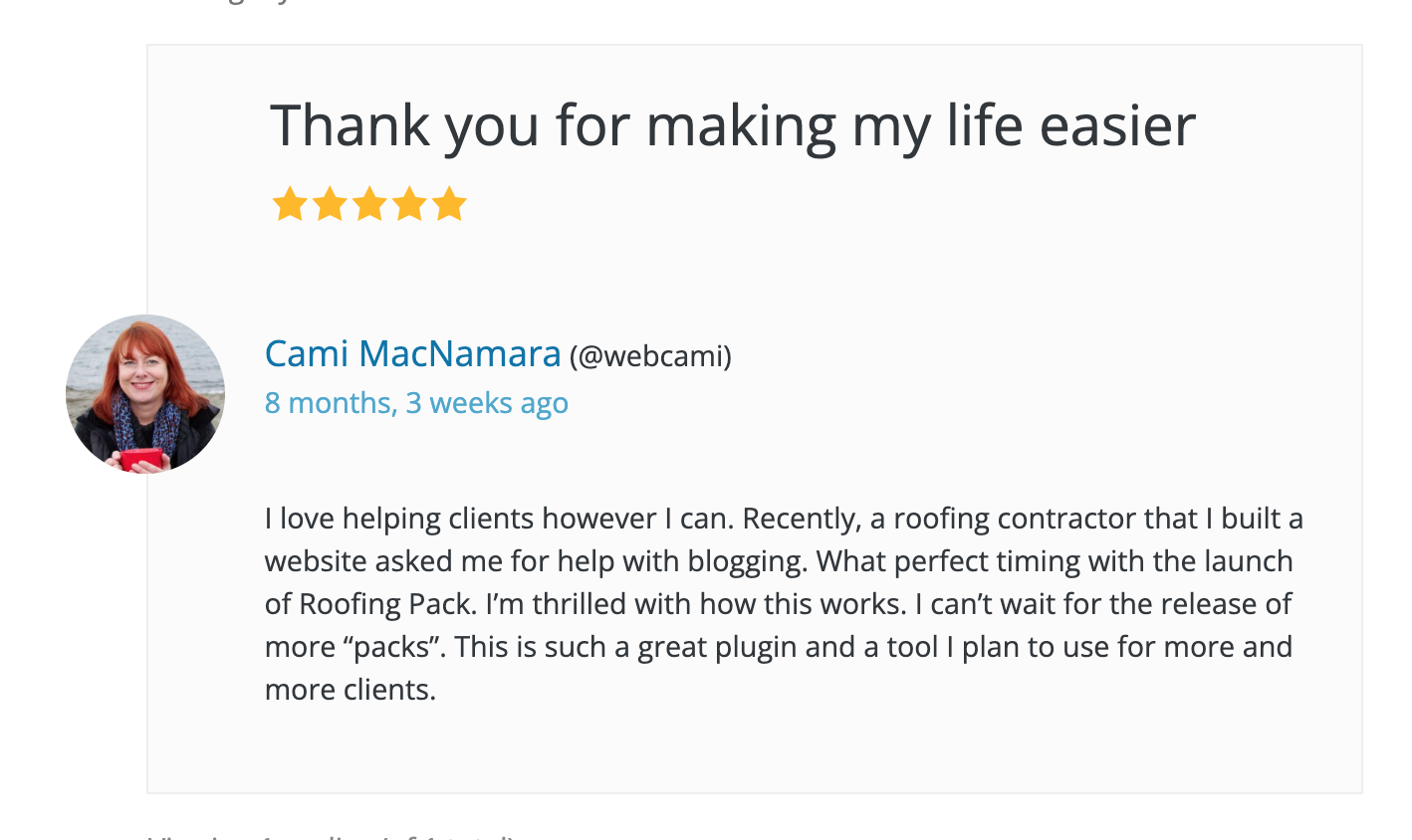
“Thank you for making my life easier. I love helping clients however I can. Recently, a roofing contractor that I built a website asked me for help with blogging. What perfect timing with the launch of Roofing Pack. I’m thrilled with how this works. I can’t wait for the release of more “packs”. This is such a great plugin and a tool I plan to use for more and more clients.” Cami MacNamara
How are you currently getting content from your web development clients? Is it holding up your payment? Is the website taking too long to launch? Are you waiting for your clients to write the content? Are you frustrated? Yeah. I know you are.
The worst part about frustration is that it directly impacts your client communication. You’re annoyed; it shows in the emails. You’re uninspired; it shows in the final product. You forgot what you actually had to do on the project. And, when it comes to being a reputable web developer, your main advantage is your communication.
“Client communication is an important differentiating feature for you over your competitors.”Mike Demo
“I’m sick of waiting on clients for content.”
Every developer that I chat with in person, on the phone, over Twitter, Voxer, or WhatsApp is waiting for a client. They’re waiting for the content. They’re waiting for the images. They’re waiting for approval. Waiting. And waiting to wait.
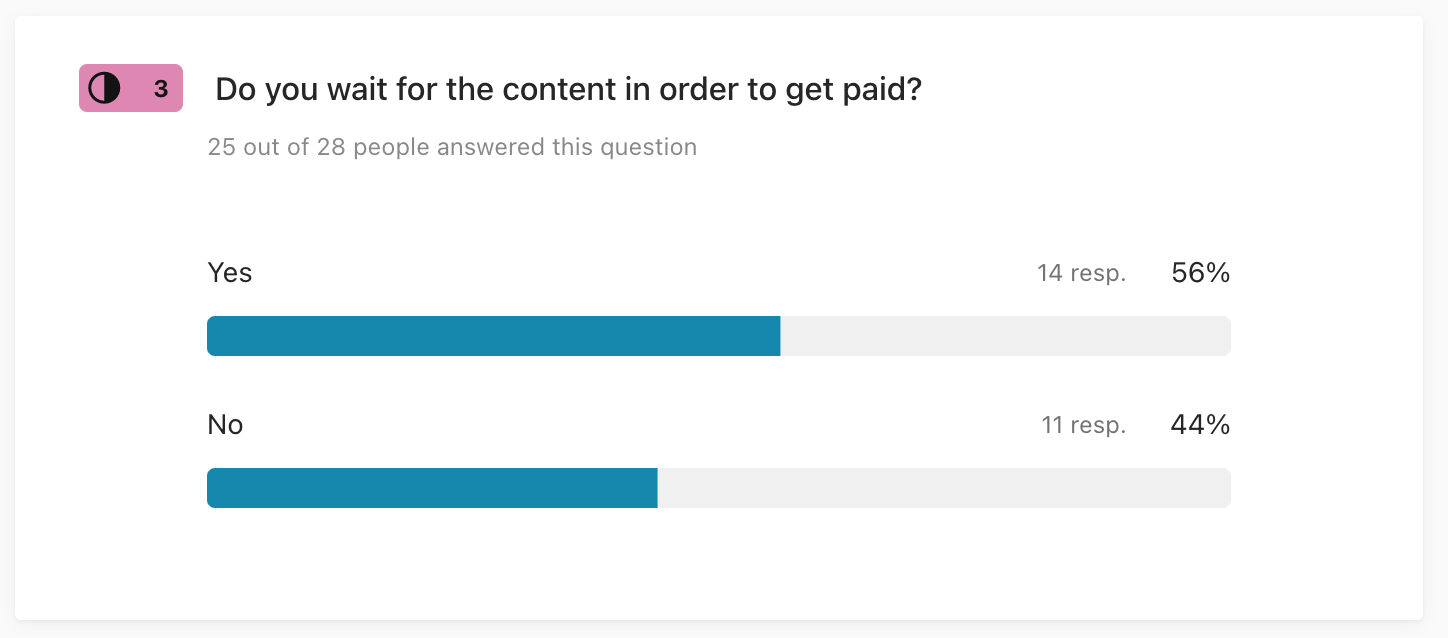
It’s frustrating, even if you don’t wait for the content to launch the site – and get paid.
Every time a website project is unfinished, it adds to your frustration as an agency, web developer, and as a human. And this isn’t an issue with new agencies.
It becomes an issue every single time you engage with a new client. Sure, you can add clauses to your contract and put their website project on the back burner. You can even charge a fee to put the project back on your production calendar.
Who has time to manage all that?
You have other clients and, frankly, better ways to spend your time.
What’s the solution?
Here’s the thing. Your clients are not copywriters. Even if they are copywriters, they’re usually way too close to their brand to effectively write for their website. So, how do you circumnavigate the client so you can build the dang website?
“Why would we trust the client with the most important part of the website — the words?” Warren Laine-Naida
Here enters Launch With Words Premium Packs. You simply purchase a single pack of twelve blog posts that are optimized for SEO. Schedule them to publish once a month, and the client has content for a year. Use the content from the blog posts for the page content. Or, set one blog post to publish and schedule one for every week post launch. That’ll be a nice 11-week SEO boost.
“The idea was unique. Willard had written starter content for both the default Twenty Nineteen and Twenty Twenty WordPress themes. She then asked why no one was doing the same for post content. Thus, a new product was born.” WPTavern
Some customers are using the blog posts as a reserve for when their clients don’t write a blog post. Other customers use it to get ahead of the blog and page content.
“Thank you for making my life easier. I love helping clients however I can. Recently, a roofing contractor that I built a website asked me for help with blogging. What perfect timing with the launch of Roofing Pack. I’m thrilled with how this works. I can’t wait for the release of more ‘packs.’ This is such a great plugin and a tool I plan to use for more and more clients.” Cami MacNamara
How Does Launch With Words Help My Content Problems?
It helps because the content is written to be specifically generic – but not boring.
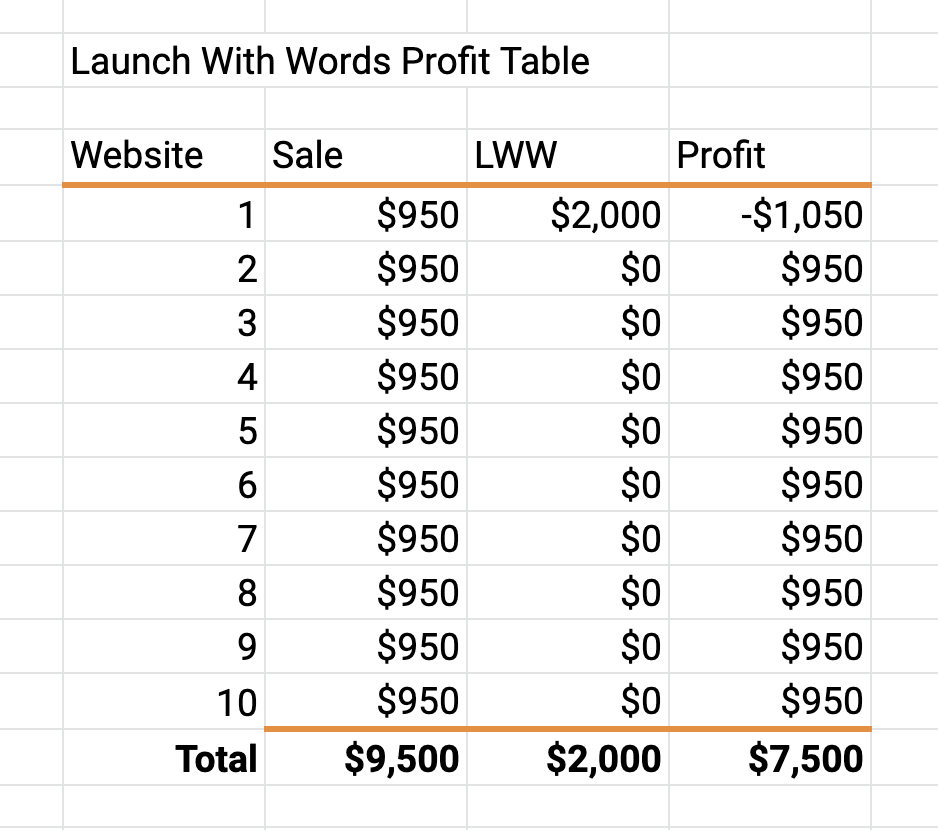
This means you can buy a pack for each new client (or email me for the $2,000 unlimited license), mark up the cost, keep the client over the course of a year, and add services like blogging and PPC.
Going from the one-and-done mentality to a systematized approach is the way to go if you want a monthly recurring revenue that scales (MRR).
It’s nothing new. These types of blog posts are also known as Private Label Rights (PLR) content. You probably have seen or read some pretty bland 200-word articles online somewhere.
What makes the content packs for Launch With Words different is that they’re not boring, stupid, fluff content.
These blog posts were written to answer common questions in the industry. They’re an average of 650 words (at least 500). Grammarly has marked them as “engaging” or “very engaging.” And they include outbound links to reputable sources as well as many internal linking opportunities.
Fluff content is the way that the Franchise Industry provides content to its franchisees. It’s also the way successful Seven Figure Agencies have provided blog and page content. I’ve spent time working for both types of industries (and writing the post and page content) which is how I came up with the idea, by the way.
“Brian Niebler & Jim Ahlin own JobNimbus (used to be RooferMarketers.com)—a digital marketing agency serving the roofing space. Before joining the Seven Figure Agency they hadn’t chosen a niche for their agency, which left them with inconsistent revenue. …Since they made the shift, they have accelerated the growth of their digital marketing agency to over $50,000 a month of recurring revenue—in just over a year.” Josh Nelson
This is the essence of the Seven Figure Agency plan with Launch With Words.
Pick a niche.
Get the Rule of Five Ones Down by selling one product at a monthly price.
Write the templated page content based on the content pack.
Watch their websites work and your monthly recurring revenue grow.
Is Anyone Really Doing This?
Yes. Fat Dog Creatives realized how easy it was to buy a single content pack for her Chamber of Commerce client that she decided to make this a niche offering. She created a landing page and is working on marketing to the more rural chambers now.
This is the review Rhonda Negard wrote for Launch With Words in the Plugin Directory.
I provided ALL of the site elements.
With the Chamber of Commerce Pack, I was able to not only design and build the site, but I was also able to provide content. That’s a big deal because my client’s board’s internet access was limited and their old site in the WayBack Machine was nothing more than a few photos and links. Between their Facebook page and the content pack, I’ve been able to create page content, not just post content.
Thank goodness!
I’m still getting the work done so I’m not behind for other work. YEA! Thank you so much for creating this awesome resource!
You No Longer Have to Wait to Get Content From Clients
Well, that’s not totally accurate. I haven’t written for every industry yet. With that said, there will be more as requests come in. If you have a request, let me know.
If you’re wondering how to niche down in your website development business, why not go after roofing contractor websites? Launch With Words is the perfect companion.
Roofing Contractor Websites – The Riches are in the Niches
If you google roofer marketing, you’ll likely come across a few ads but the number one agency for integrated marketing for roofers (at the time of this post was Roofer Marketers. (They were acquired by JobNimbus in 2022.) Brian, Jim, and the team there are amazing and they do a great job in their PPC-based website builds. I used to write for them.
Core and More Technologies also offers integrated marketing including website builds, social media, CRMs, and PPC.
Certainly, these two companies have been successful by targeting a specific demographic: roofing contractors.
According to IBIS World, there are over 100,000 roofing contractors in the United States alone. If those two companies have even a 25% market share, that leaves 75,000 roofing contractors who need basic, functional websites that inform, sell, and convert. That’s a big market share waiting for you. Yes, you.
Why Build Roofing Contractor Websites in WordPress?
Simply speaking, 500 WordPress websites are built every day, according to research done by Austin-based WPEngine. WordPress isn’t going away and is one of the best platforms to build upon – especially for small businesses like roofing contractors.
What is Launch With Words and Why Does Blogging Matter?
The Premium Pack for Roofing Contractors has twelve fully-written blog posts following SEO best practices. These are not boring, fluff pieces. They’re meant to answer frequently asked questions by consumers looking for roofing repair and reroofs.
These blog posts, when scheduled regularly, give Google the cadence they’re looking for (SEO) to show that your client’s roofing company is in business and has engaging contact. Your client will say that their “website works.”
The roofing articles are imported as drafts. Backdate one of the posts and schedule the balance for the next eleven months. Boom, a year of content is done. Or, backdate one article, and schedule the balance of the roofing contractor blog posts for the next eleven weeks. Launch the site with words. Get it? Launch With Words! How you schedule those drafts is up to you.
That aggressive publishing schedule post-launch will give the new website quite a lift and your agency 10 weeks to get some more content written and published on that site – all under the SEO budget for your monthly maintenance contract. (You have a maintenance contract, right?)
Each article is formatted and once you import the pack, each article is on the WordPress website as a draft. It’s not an RSS feed. It’s not syndication. You now own the content. Customize the content or leave it as is. It’s up to you. The difference between the definition of traditional PLR from The Balance is that the
Launch With Words articles are written to be specifically generic. No revisions are needed.
“You don’t have to blog for long to know that coming up with new ideas is difficult. PLR content provides you with ideas and the basics of an article. All you have to do is revise.” The Balance Small Business
Who Wrote the Launch With Words Roofing Articles?
I wrote the content. I did not outsource the writing of the roofing contractor content pack. I’ve been writing about roofing and construction for the last 22 years. I started working with roofers in 2000 and eventually moved to a general contractor. I left the construction industry in 2015 to work for an advertising agency that specialized in the franchise industry.
Why do I include my resume? Because the franchise industry uses syndicated content on their multisite installations all day long. They don’t worry about duplicate content issues. Do you know why? It doesn’t matter as much as we think. Duplicate content isn’t their issue; no content is.
Get to the Point. How Does Launch With Words Help Me Sell Roofing Contractor Sites?
As far as I know, no agencies are doing this with content that scales the way private label rights (PLR) content does. The big agencies do this with the franchise industry every day of the week. And they pay a pretty penny for it, too. Or is it a pretty hundy? Or Maybe a pretty bitcoin? But you get the point.
Okay so here are the four steps to making money with Launch With Words.
Find Roofing Contractors who don’t have a website. Searching on Google Maps is a great way to do this as I demonstrate in this video. Mike Demo recommends being part of your Chamber of Commerce or BNI networking group as the roofing web person.
Buy the Launch With Words Roofing Pack for $497. It comes with a home and about page template. Wait. What? Yes! Fill in the blanks (no waiting for clients to give you content).
Rinse and repeat. If you did 3 sites, you would make $1,359 in profit.
Or buy the unlimited site license of $2,000.
Build 3 sites.
$950 x 3 = $2,850 less $2000 for the licence = $850 in profit.
The fourth website is $950 in profit. The fifth is also $950 in profit.
The total profit for the four websites is $1,800. Profit for five websites is $2,750.
To put it another way, if you build ten of these sites and purchase the roofing contractor pack separately, you can make a profit of $4,530. That’s not bad for ten quick websites. Imagine if you did that every month!
However, if you purchase the multisite license, ten websites will yield a profit of $7,500. That’s a pretty penny. Makes you kind of want to niche down in the roofing industry, right?
Are You Ready to Make Money With Launch With Words?
What are you waiting for? Go find some roofing contractors in your local community who need websites. It’s a win-win-win. You get a client, they get a website, and I get a sale. They make money, you make money, I make money. Boom. Done. Get it.
*Not a tax advisor. Obviously, there are additional costs to running a business and building websites. But you get the idea.